
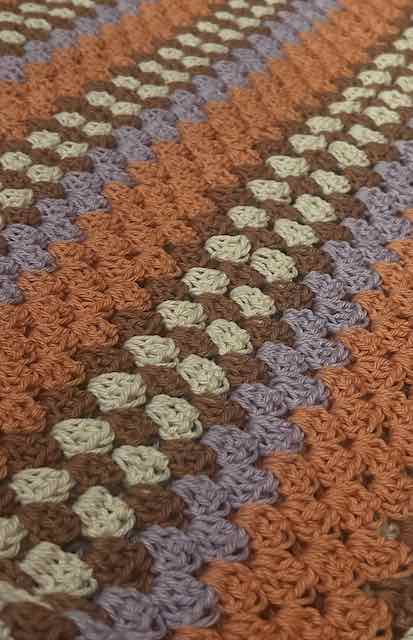
You heard me, recycle and repurpose that precious yarn. I know, when you take out your stitches the yarn can be a little kinked, don’t fret, get it wet. Here’s what I do when a client asks me to take apart a much loved piece to recover the yarn and make something else. Usually it’s an old baby blanket to repurpose as mittens or a big shawl, what ever your goal may be, let’s keep some of the yarn out of the trash stream and back into our closets. Here’s what I do:
- If possible, figure out the gauge of the project. You cannot tell what the needle or hook size is of course, but write down what you know about the yarn including the stitches and rows per inch. This information will be useful when you make a label for it later in the process.
- Unravel the piece. Usually this involves un-doing a few seams, use a seam ripper for those and then get to work on the goal, recovering the yarn in to a ball.
- Wind the ball onto a swift or around the back of a chair to make it into a nice tidy hank.
- Secure the hank with another bit of left over or scrap yarn by making some short lengths, about 6″ long, wrap around the side of the hank while it’s still on the swift or chair then know it to secure it. I usually do this about 4 times, sometimes 6 if it’s a really sticky fiber like mohair.
- Give it a nice soak. Soaking won’t shrink your yarn, heat, rubbing it, and other activities might so treat it like you’d like to be treated, with a nice warm but not hot bubble bath. I use my kitchen sink because it’s bigger than my bathroom sinks. The water should not be hot unless you know the fiber can take the heat. I usually keep it a comfortable 100 degrees fahrenheit. I like to use Soak to add a little bubbly to the water. Set the hank into the water and let it fall into the basin or gently push it into the water, don’t smush it down, it could felt.
- Allow the hank to sit in the warm bath about a half hour or hour, even over night is fine, what matters is that the water saturates the fibers.
- Drain the sink.
- Remove the hank and gently roll it up in a towel. Once the towel is fully around the hank you can gently squeeze out the bulk of the water, don’t be too aggressive, you don’t want it to felt.
- Allow the hank to dry. I usually place it on a drying rack or on my picnic table in the sun.
What comes next depends on how long I think I need to store the yarn. I personally don’t like to store it in a ball, I prefer to store the yarn in a hank until I need it, it gives the yarn another chance to relax.
If you choose to start using the yarn immediately, put it onto a swift and make your yarn cake.
If you choose to store the yarn, shake out the hank a bit to help further relax the fibers and afford yourself the chance to make sure it’s completely dry. After it’s completely dry, twist it up, label it and store it for future use. Labeling is really important. I typically write a few specifics on each hank; weight, source (what it was, for instance my latest reuse was a men’s medium sweater), composition of the yarn, and if it was a commercially made item, I keep the original garment tag too just for fun.
A few extra tips:
Sweaters with cut selvedge edges won’t give you enough yarn to make into a proper hank unless you want a hank with lots of knots.
Items knit or crocheted in the round produce longer lengths of yarn for your unraveling and repurposing pleasure.
If the yarn is particularly delicate, try steaming it instead of putting it into the sink for a soak. It might be less stressful to use steam than water which would then need to be expelled from the yarn later. Steam is water of course but you use a lot less water when you steam than if you soak the hank in the water therefore less drying time is needed and it’s not necessary to wring out the yarn to remove the water.
If the hank is still too kinked, try warmer water or a good steam.
Comments are closed